
Professional Penetration Testing Toolkit
Kali Linux, maintained by Offensive Security, is a free and open-source distribution built for penetration testing, digital forensics, and ethical hacking. It provides hundreds of pre-installed tools used by security professionals to assess networks, uncover vulnerabilities, and conduct forensic analysis. With its rolling-release model, Kali delivers continuous updates and the latest security patches, making it a trusted platform for professional security work.
Top Recommended Alternative

Windows users can access Kali through the Windows Subsystem for Linux (WSL) or by running a virtual-machine image, offering a convenient way to explore its full capabilities without leaving Windows.
A Comprehensive Set of Security Tools
Kali Linux includes an arsenal of more than 600 specialized tools for tasks such as network scanning, packet analysis, and exploitation testing. Key programs include:
- Nmap for network mapping and auditing
- Wireshark for packet inspection
- Metasploit Framework for vulnerability exploitation
- Aircrack-ng for wireless security testing
These resources allow experts to perform deep investigations, analyze threats, and simulate attacks in controlled environments. However, users need a solid grasp of Linux commands and security principles to make the most of the system.
Flexible Installation and Professional Focus
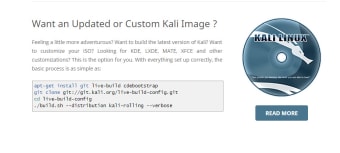
Kali offers multiple setup options, from bootable ISOs and live USBs to persistent installations that save session data. Live sessions help new users test the system before committing to a full installation. Because it emphasizes command-line precision and direct system control, Kali can be intimidating for beginners. Yet for cybersecurity practitioners, this complexity is what gives the distribution its unmatched versatility and power.
A Professional Toolkit for Cybersecurity Experts
Kali Linux stands as one of the most complete environments for ethical hackers, auditors, and digital forensics specialists. Its constantly updated toolset and flexibility make it an indispensable asset in professional security workflows. While not intended for casual users or general computing, it remains a benchmark for authorized, high-level penetration testing.

.png)